


Beneath
the Surface
Geothermal’s Role in Delivering
Clean Heating, Cooling and Power
22nd July 2026 | 16 Minute Read

MAIN REPORT
Close
Download
Add your details and select a document to download.
Scroll down to explore the key insights
Geothermal energy
An untapped opportunity for growing clean heat, cooling and power
Clean electrification is the foundation of the transition to a global net-zero economy. Electricity’s share of final energy demand globally is expected to rise from roughly 20% today to 60–70% by 2050, largely driven by the electrification of buildings and industry.
Geothermal technologies can support this transition by delivering clean heat, cooling, storage and firm power where geology, demand, and economics align.
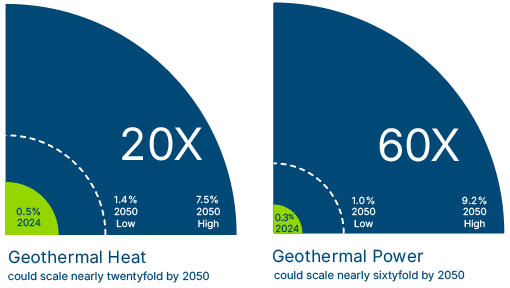
Today, the combined contribution of geothermal energy is modest: 0.5% of global final heat consumption and 0.3% of global electricity generation in 2024. But there is potential for a larger role – possibly increasing to 8% of global final heat consumption and 9% of global electricity generation by 2050.
The question is which geothermal technology can scale where, and what policymakers, investors and corporates need to do to unlock it.
One resource, three different technologies
Geothermal solutions deliver clean heat, cooling, storage and firm power – four levers the electrified economy needs
Debates about geothermal energy’s potential tend to treat it as a single technology. However, three distinct families exist, and conflating them can lead to misplaced optimism or unwarranted scepticism.
Shallow geothermal
systems (heat)
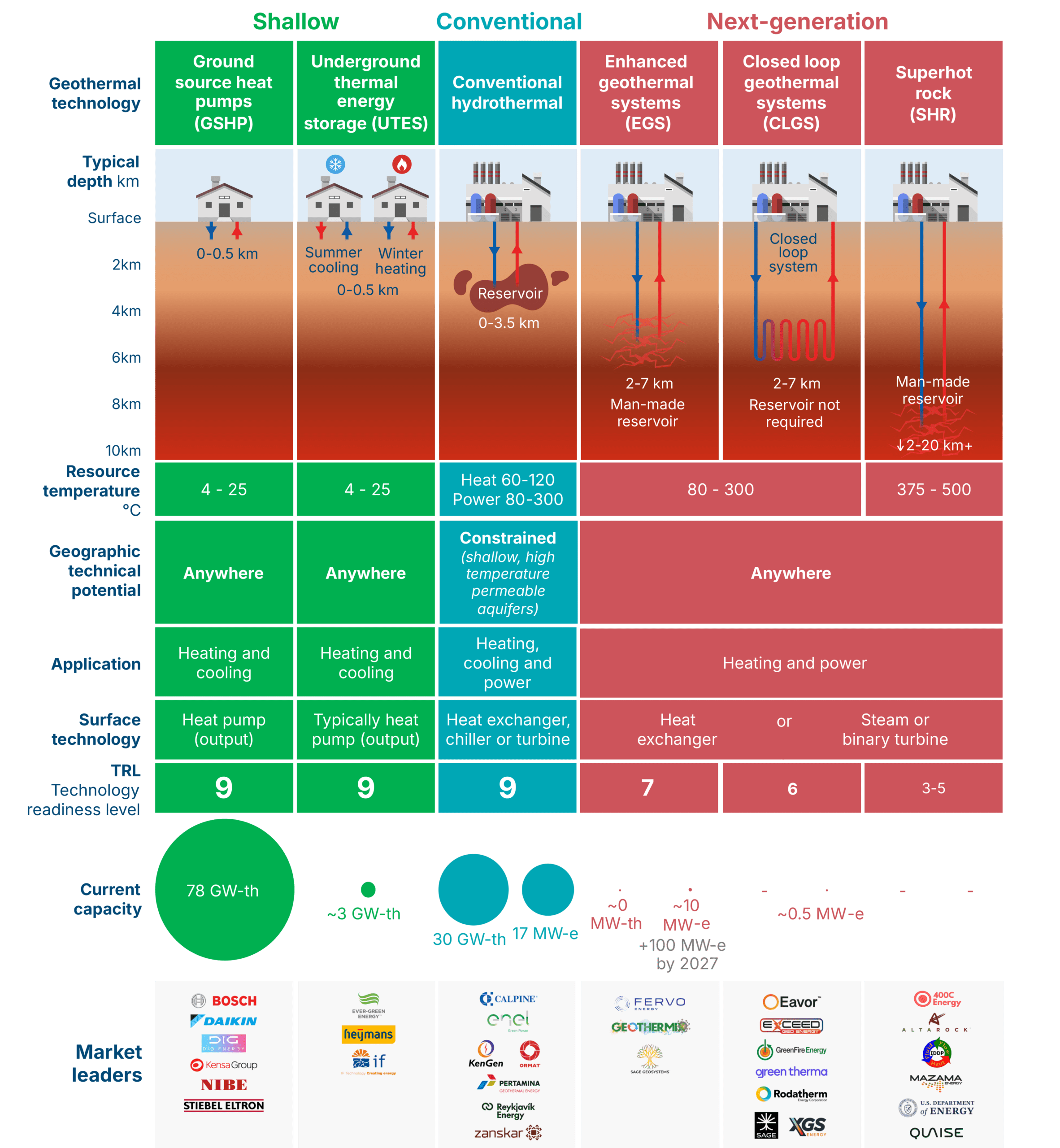
Shallow geothermal systems capture or store low-temperature heat for space and water heating – primarily through ground-source heat pumps (GSHPs) and underground thermal energy storage (UTES).
Conventional hydrothermal
systems (heat and power)
Conventional hydrothermal systems draw water from naturally hot, permeable aquifers for district and industrial heat, district cooling or electricity generation via turbines. Deployment is constrained by geology.
Next-generation
systems (heat and power)
Next-generation systems use oil and gas drilling techniques to engineer reservoirs or sealed wellbores, extending the viability of deep geothermal to more geographies. They include enhanced geothermal systems (EGS), closed-loop geothermal systems (CLGS) and superhot rock. Most remain at an early commercial stage, but demonstration projects have recently reached operation.
Each technology group has fundamentally different maturities, cost profiles and use cases, and requires distinct policy and investment action to unlock scale.
Shallow geothermal, conventional hydrothermal, and next-generation technologies span a range of resource characteristics, applications, and maturities
EXHIBIT 1 Characteristics of geothermal technologies 2026
Notes & Sources
Notes: Underground thermal energy storage parameters refer to aquifer and borehole thermal energy storage (excluding more nascent options such as geothermal mechanical storage). Steam turbines include flash, double flash, or binary Organic Rankine Cycle. Assumed TRL scale: TRL 1-3 = Research to Proof of Concept; TRL 4-6 = Lab to Pilot Demonstration; TRL 7-9 = Prototype Demonstration to FOAK / Full Commercial Deployment. GSHP capacity figure as of 2020. Underground thermal energy storage only includes aquifer thermal energy storage as most borehole systems today are not designed for seasonal use. 2.9 GW-th of ATES supplies ~2.5 TWh-th of heating/cooling annually. Next-generation geothermal capacity is negligible globally: EGS <10 MWe operating (Fervo Cape Station Phase I ~100 MWe targeting late 2026), CLGS effectively zero net to grid today (Eavor Geretsried is partially operating at 0.5–1 MW-e gross, with remaining loops on hold), superhot rock is pre-pilot with no commercial projects. Heat deployment for next gen. is similarly nascent.
Sources: Systemiq analysis for the ETC (2026); IEA (2024), The Future of Geothermal Energy, IEA (2023), Renewables 2023: Heat; Kearney Energy Transition Institute (2025), Geothermal energy, turning up the heat; J. Lund (2020), Direct Utilization of Geothermal Energy 2020 Worldwide Review; M. Herrmann (2025), Capital costs of aquifer thermal energy storage (ATES): a review. BNEF (2025), US Next-Generation Geothermal Makes Unsung Progress; US DoE (2024) Pathways to Commercial Liftoff: Next-Generation Geothermal Power Updated.
Shallow geothermal – ready to scale
Shallow geothermal technology has high potential to scale but is currently under-deployed. The barrier is finance and siting, not technology.
Shallow geothermal technology includes ground source heat pumps (GSHP) and underground thermal energy storage (UTES). Three linked objectives define the role of these technologies in an electrifying economy:
Getting buildings off gas (alongside alternatives such as air-source heat pumps)
Helping to meet rising cooling demand
Managing the power demand peaks driven by increasing heating and cooling needs.
Ground source heat pumps
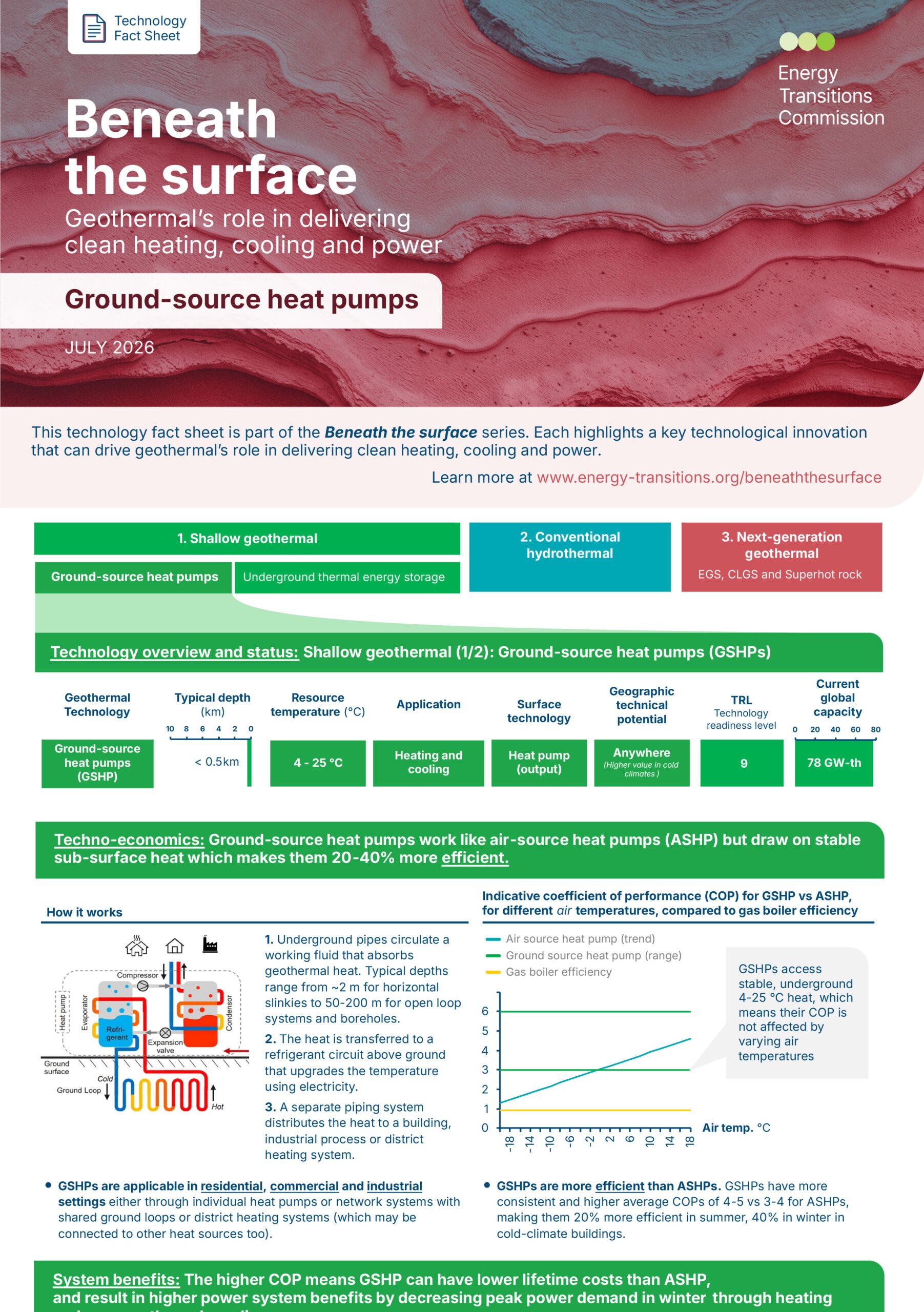
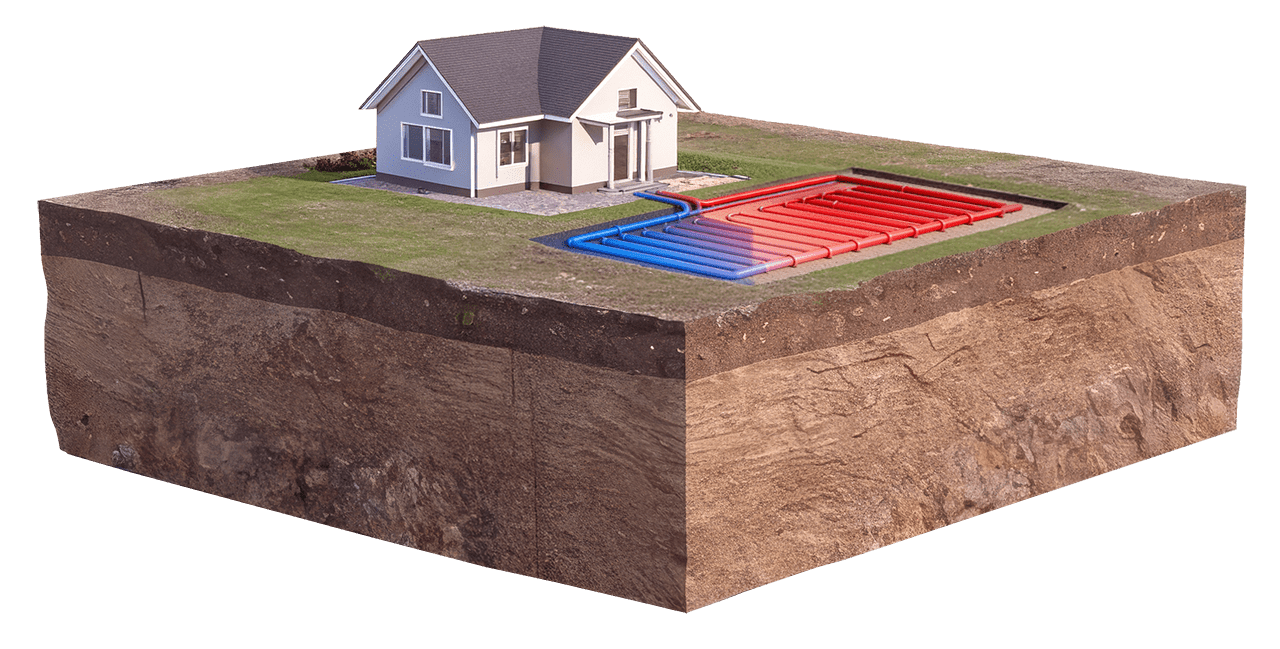
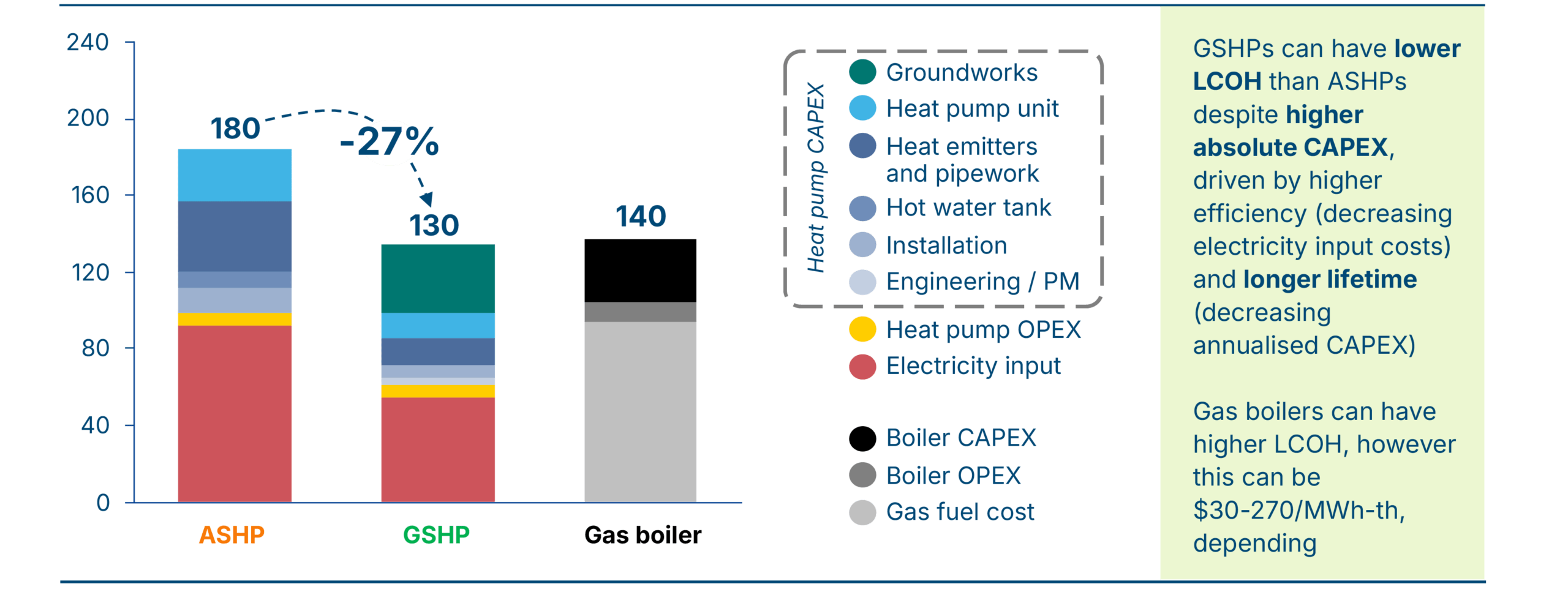
GSHPs draw on stable underground temperatures rather than outdoor air, making them 20–40% more efficient than air-source alternatives for heating in winter and cooling in summer. Despite higher upfront costs (driven by groundwork, typically around $20,000 for a household), lifetime costs are generally lower in cold climates due to lower operating expenditure driven by their high efficiency.
Relative to air-source heat pumps, GSHP can reduce peak power system capacity and associated grid build out in markets where such peak is increasingly driven by heating in winter (e.g., Northern Europe) or cooling in summer (e.g., Southern US). In the US, this could reduce required power generation capacity in 2050 by around 10% and transmission capacity by 20%, saving consumers $77 billion per year compared to pathways focused purely on air-source alternatives.
Yet GSHPs currently represent under 10% of total heat pump capacity worldwide. High adoption of GSHPs could increase deployment by 4–6x to 20–40 million units globally by 2050.
ASHPs are expected to remain dominant for residential buildings, mainly because GSHP have relatively high upfront costs and more complex installation and siting options – limiting their uptake in existing (urban) housing fleet.

Strong deployment potential lies in large-scale applications of GSHP in e.g. district heating networks, street networks of individual heat pumps or commercial users – where economies of scale means they are particularly competitive.
In cold climates, high coefficients of performance (COP) for ground-source heat pumps (GSHP) can have competitive lifetime costs through low running costs
EXHIBIT 2A COP vs. outdoor temperature for air-source heat pumps (ASHPs) and GSHPs COP
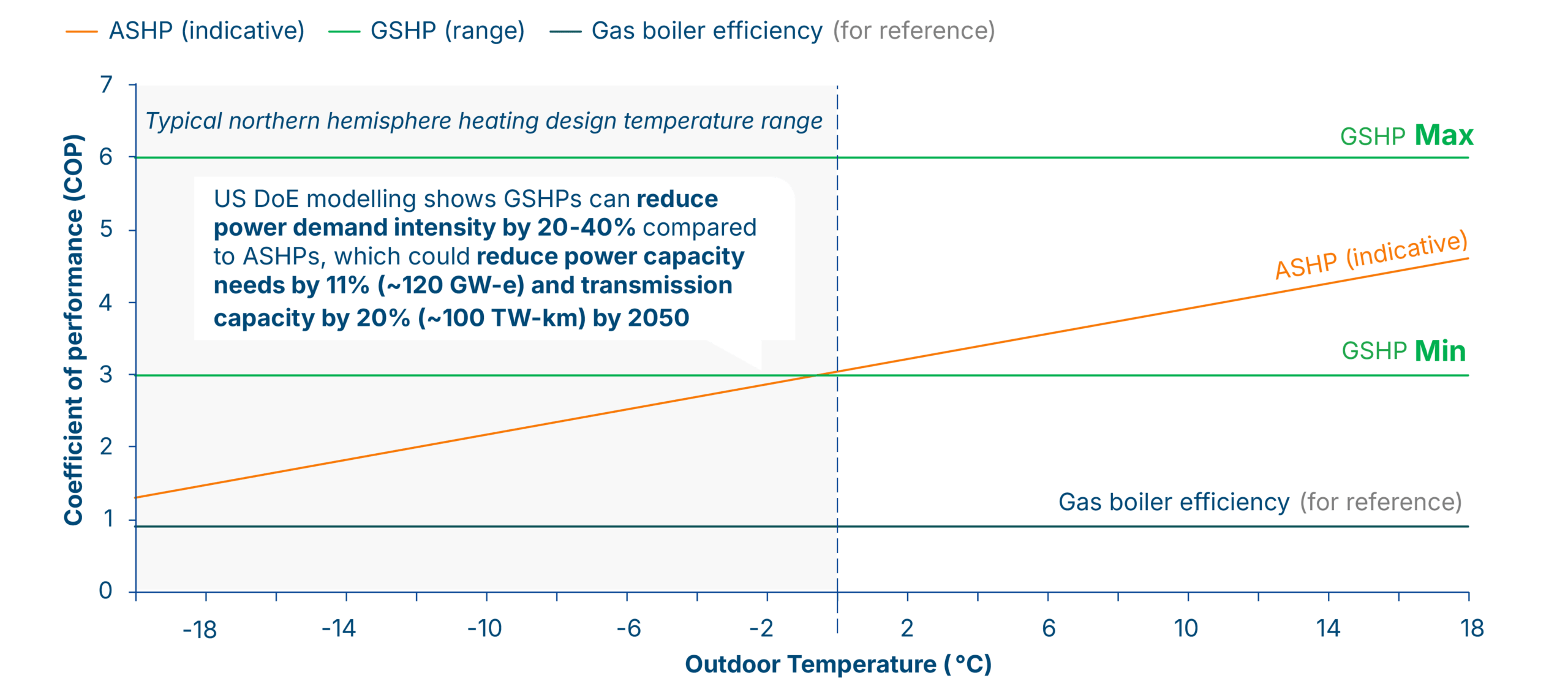
EXHIBIT 2B LCOH breakdown for ASHP, GSHP and gas boiler (UK retrofit example $/MWh_th (real 2024)
Notes & Sources
Notes: LCOH = Levelised cost of heat; ASHPs are sized at ~6 kW (55°C flow) for the Victorian terrace retrofit; GSHPs use Kensa Evo 7 COP curves with one borehole per dwelling (216 m retrofit) in typical UK ground conditions, reflecting modelled annual heat demands of 13.9 MWh per year and 5.6 MWh per year respectively (back-calculated from gas demand using a boiler efficiency of 90%). Element Energy assumptions include OPEX: £60 per year for both technologies. Fuel: 2020 baseline electricity tariffs, hourly COP-weighted. Lifetimes: ASHP 15 years, GSHP heat pump 25 years, groundworks 100 years. Gas boiler LCOH assumes £3,000 installed CAPEX over a 12-year life, 12 MWh-th annual demand at 90% efficiency, 6.5p per kWh of gas, and a 3.5% real discount rate.
Sources: Systemiq analysis for the ETC (2026), García-Cascales, M. (2020) Spatial assessment of the Ground Source Heat Pumps suitability against conventional heat pumps based on Superficial Air Temperature, The Engineering Toolbox (2025) Heat Pumps – Performance and Efficiency Ratings; Element Energy for The Kensa Group (2023), Low Carbon Heat Study – Phase 1; Department for Energy Security and Net Zero (2025), Quarterly Energy Prices
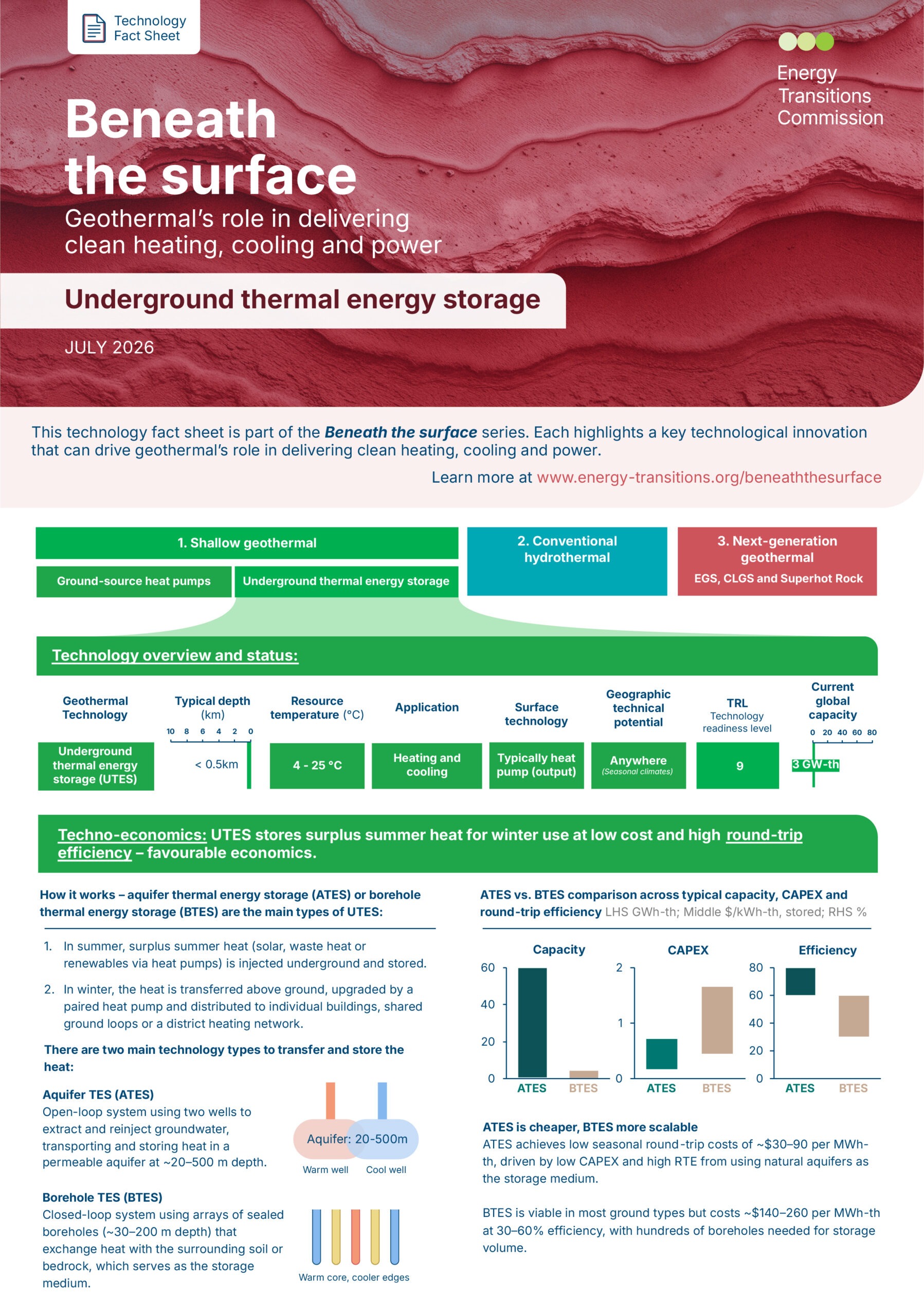
Underground thermal energy storage
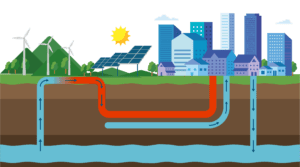 UTES is a seasonal storage technology. It captures surplus heat in summer and cold in winter and stores it underground, typically in aquifers or boreholes, for release as heating in winter or cooling in summer.
Aquifer Thermal Energy Storage (ATES) achieves a cost of heat of approximately $30–90 per MWh-th produced, cheaper than most clean seasonal storage alternatives.
Markets most suited to UTES buildout for seasonal heat storage are high latitude “Windbelt” systems, with rising seasonal balancing challenges as the share of wind in electricity generation increases, and countries with existing or planned heat networks.
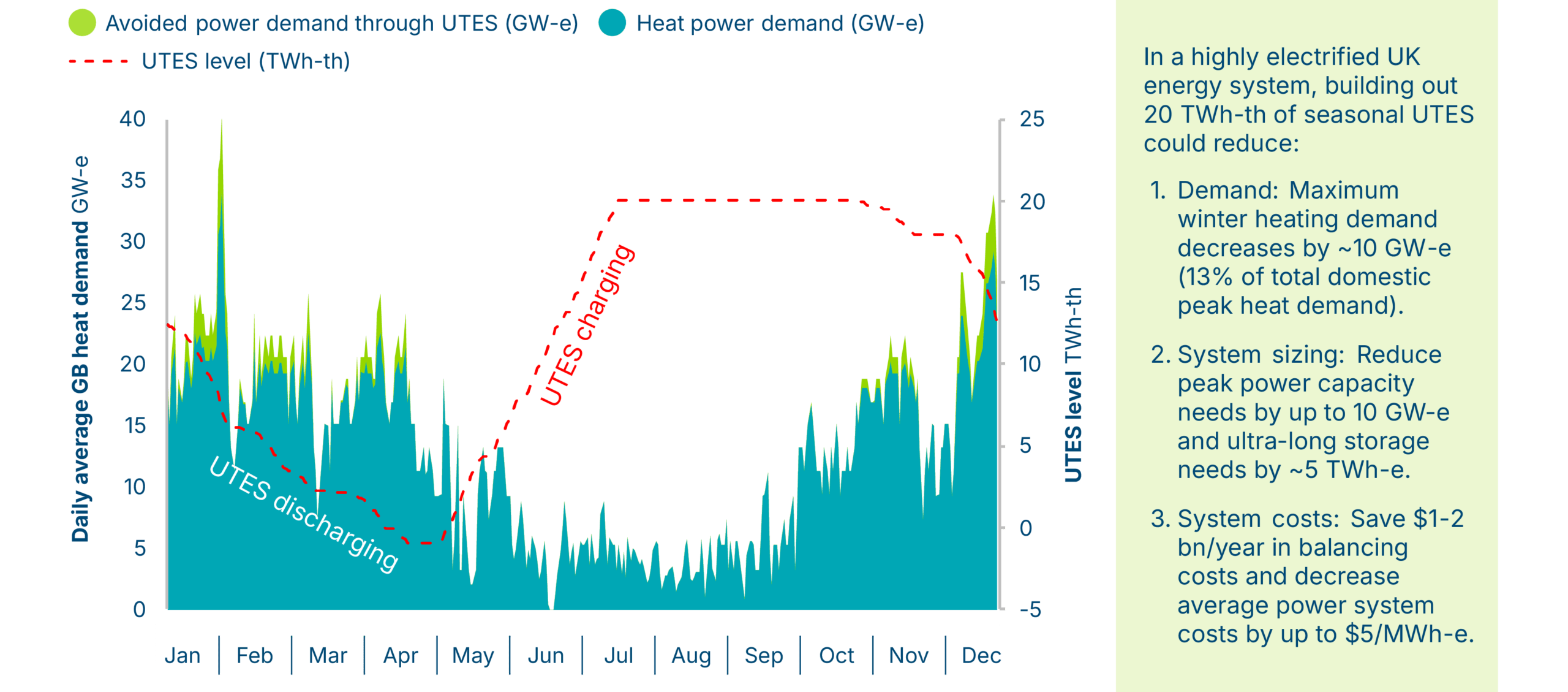
In the UK, 20 TWh-th of seasonal UTES, offsetting ~5% of annual heat demand for heat in 2050, could cut peak winter power demand by 10% and save up to $5 per MWh-e in system costs compared to natural gas or alternative seasonal storage options.
Alongside heat storage, the cold storage function of ATES is increasingly relevant as cooling demand in summer rises. This is considered “free cooling”, as it’s done via direct heat exchange without a compressor, and is therefore among the lowest-energy input cooling available.
5%
potential reduction in winter power demand via season UTES
Underground thermal energy storage (UTES) can materially decrease seasonal demand peaks, system sizing and total system costs if deployed at scale
EXHIBIT 3 Hypothetical underground TES impact on Great Britain (GB) 2050 clean electrified heating demand Daily average GB heat demand GW-e; TES level – TWh-th
Notes & Sources
Notes: 20 TWh-th of storage is 13% of the UK’s 2050 annual heat demand. 70% round-trip efficiency and 6% real WACC assumed, alongside average heat-pump COPs of 3 in winter and 4 in summer. UTES is charged May–September from excess renewables. Discharge is optimised for peak-shaving: the store discharges whenever national heating demand exceeds 30 GW-e, at up to 10 GW-e, cutting maximum winter demand by 10 GW-e (75 → 65 GW-e) across ~840 hours while cycling ~75% of the store (within its physical capacity). Peak reduction is limited by discharge power, not stored energy; demand-side flexibility would reduce the residual peak further. Demand is modelled for one weather year, therefore a wide range of variations is not accounted for. System cost savings span energy value through avoided ultra-long electricity storage ($400/MWh-e assumed) and peaker capacity cost ($50/kW-e/year assumed), net of additional UTES levelised cost of thermal storage. System cost impact range calculated using 7 GW-e discharge as the lower bound.
Sources: Systemiq analysis for the ETC (2026); ETC (2025), Power Systems Transformation: Delivering Competitive, Resilient Electricity in High-Renewable Systems; NESO (2022), Future Energy Scenarios 2022 (FES 2022); Brown C.S. (2024), Assessing the technical potential for underground thermal energy storage in the UK.
Closing the financing gap
Capturing shallow geothermal’s potential requires policy that addresses the upfront cost barrier through targeted capital subsidies, building-code mandates for new builds, district-scale financing models that spread ground-loop and UTES costs across multiple buildings and embedding seasonal UTES into district-heating planning.

Conventional hydrothermal – proven, competitive, capped by geography
Conventional hydrothermal is mature and cost-competitive where geology allows, but geological constraints will keep its contribution below 1% of heat and global power generation by 2050, with an emerging role in cooling.
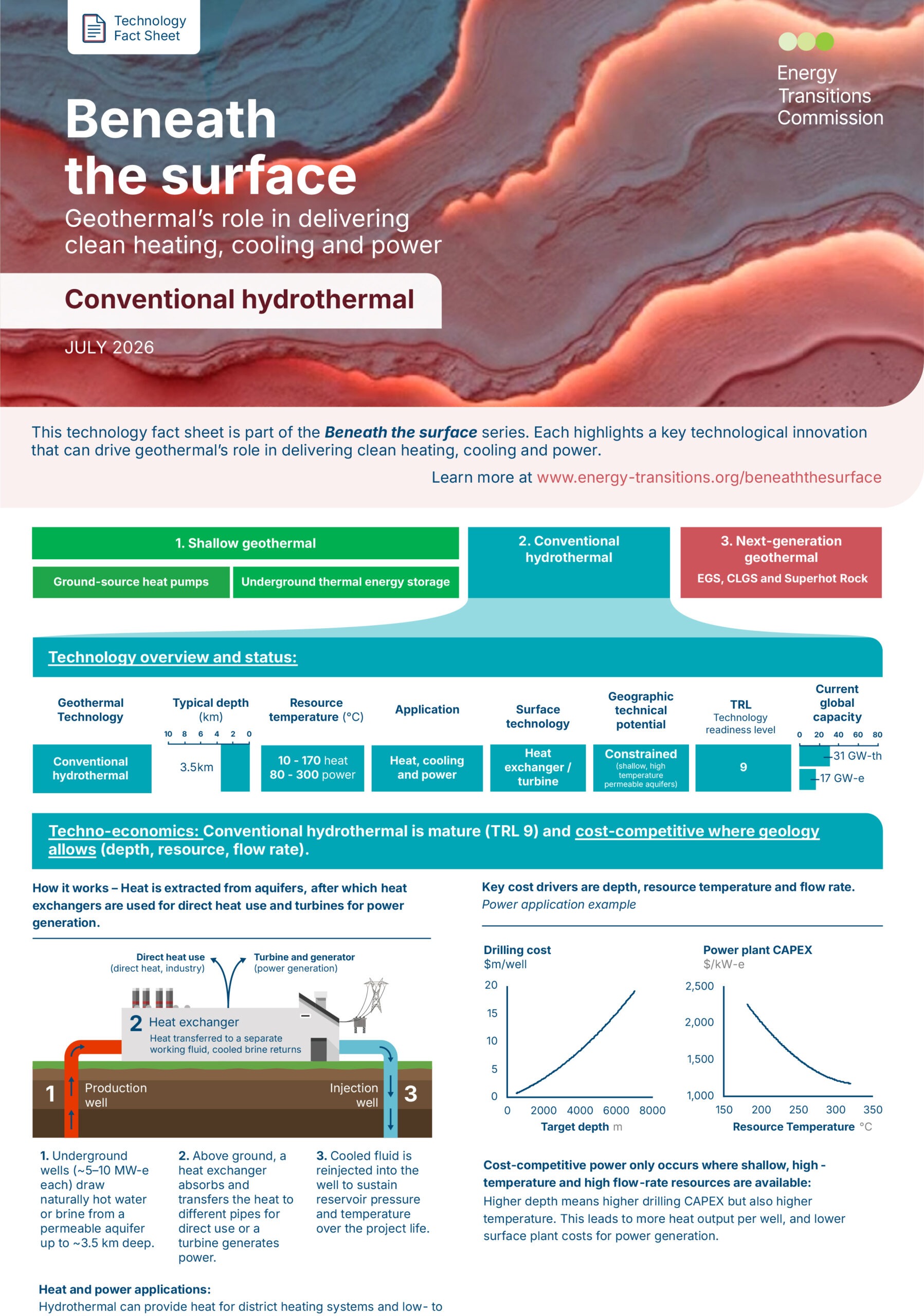
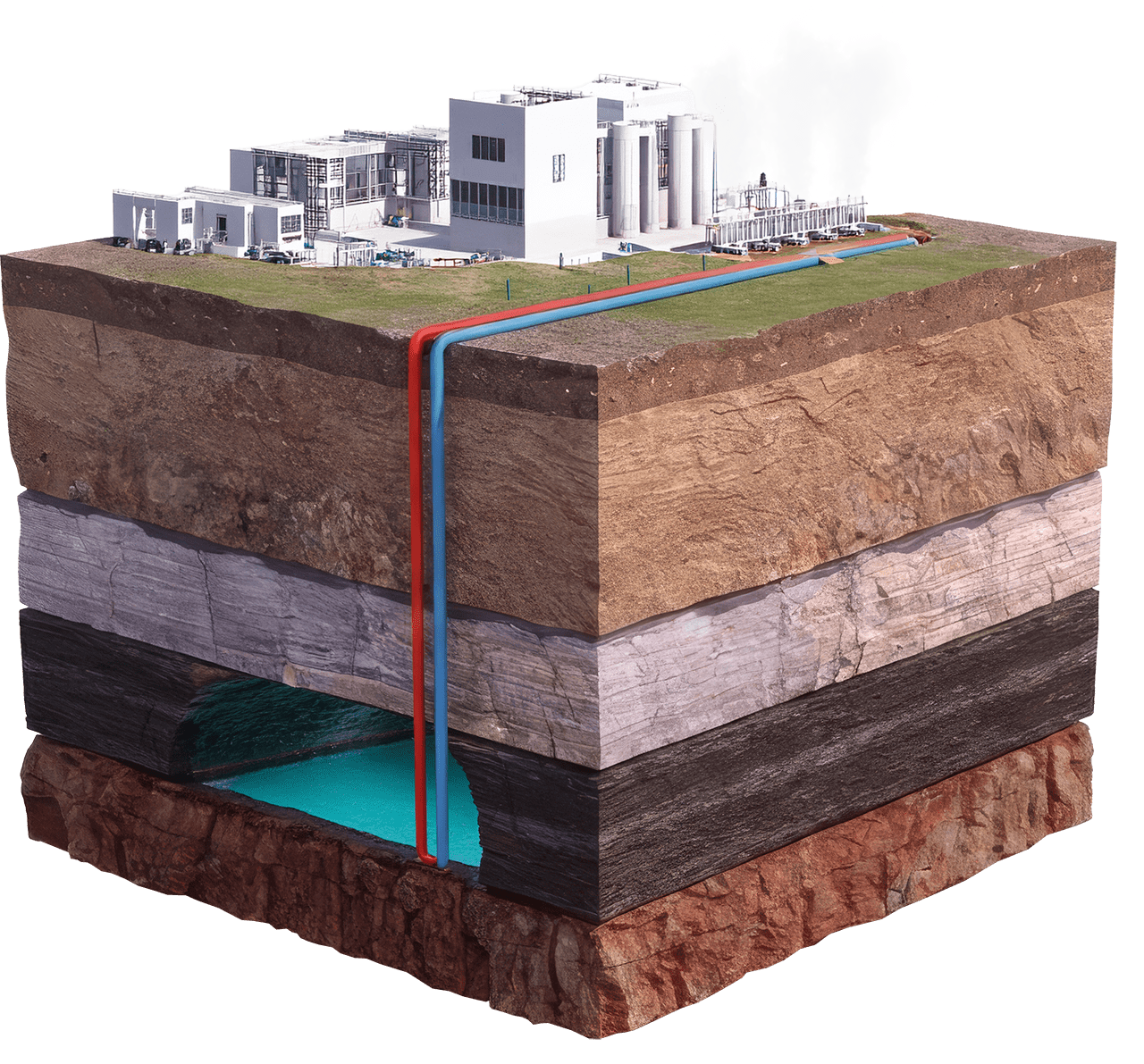
Conventional hydrothermal is a mature technology that draws water from hot, permeable aquifers at depths of typically less than 3.5 km. Conventional hydrothermal is relevant for three energy system needs: displacing gas for district and industrial heat, providing district-scale cooling and providing reliable, round-the-clock clean power to complement variable renewables. Its application is bound to places where naturally hot underground water exists at accessible depths.
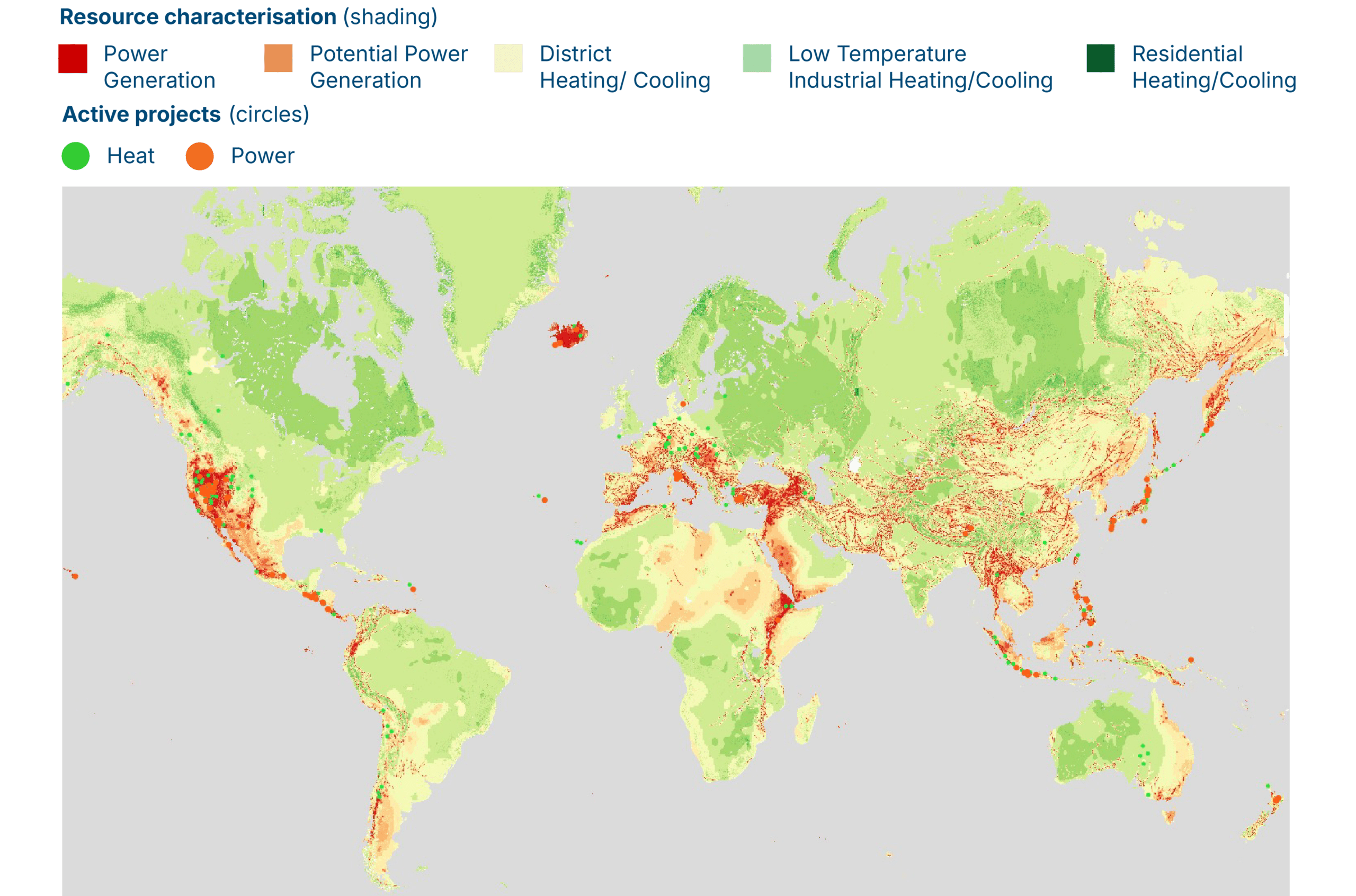
Conventional hydrothermal power potential is concentrated in tectonically active regions; district, residential and low-temperature industry heating/cooling potential is ubiquitous
EXHIBIT 4 Shallow high-temperature anomalies indicate where hydrothermal can scale
Notes & Sources
Notes: Resource characterisation uses Project InnerSpace’s Subsurface Favourability Map, developed through a Weighted Overlay Analysis, a Geographic Information System -based technique that integrates multiple spatial data layers while assigning varying weights based on their relevance and significance for a specific objective.
Sources: Project InnerSpace (2025), GeoMap Beta; Coro et al. (2020), Predicting Geographical Suitability of Geothermal Power Plants; World Resources Institute (2019), A Global Database of Power Plants; National Geographic (n.d.), Mapmaker, Plate Boundaries. Available at <https://www.arcgis.com/apps/instant/atlas/index.html> [Accessed 07 2026].
Heat has been, and is set to remain, the broader of the two roles.
Direct heat use is ~140 TWh-th per year today (around 0.3% of global heat demand) and could rise 3-5 times to 400–700 TWh-th per year by 2050 (~1% of global final heat consumption). Heat applications require thermal reservoirs of only 50 °C for most applications (with a minimum depth of ~200 m) and can plug into existing district heating infrastructure.
Cooling is an emerging application
Paired with heat-powered cooling equipment, conventional hydrothermal can supply district-scale cooling with no electricity input. A pilot in Masdar City, UAE, met around 10% of the city’s cooling needs from 90 °C geothermal water, a model with growing relevance as cooling demand rises fastest in hot, water-stressed regions.
10%
of the cooling needs of Masdar City, UAE met by conventional hydrothermal systems
For power, the higher temperature requirements (80–300 °C) concentrate viable resources in geologically active regions
East Africa, Southeast Asia, Iceland and parts of Central America. Where conditions are met, plants can run at 60–90% of their maximum output continuously, comparable to baseload fossil generation, providing firm generation that could offset some balancing costs that other renewables would incur. However, as wind and solar power take on a growing share of electricity generation, there will be less room in power systems for assets that cannot economically operate flexibly to adjust their output to meet demand.
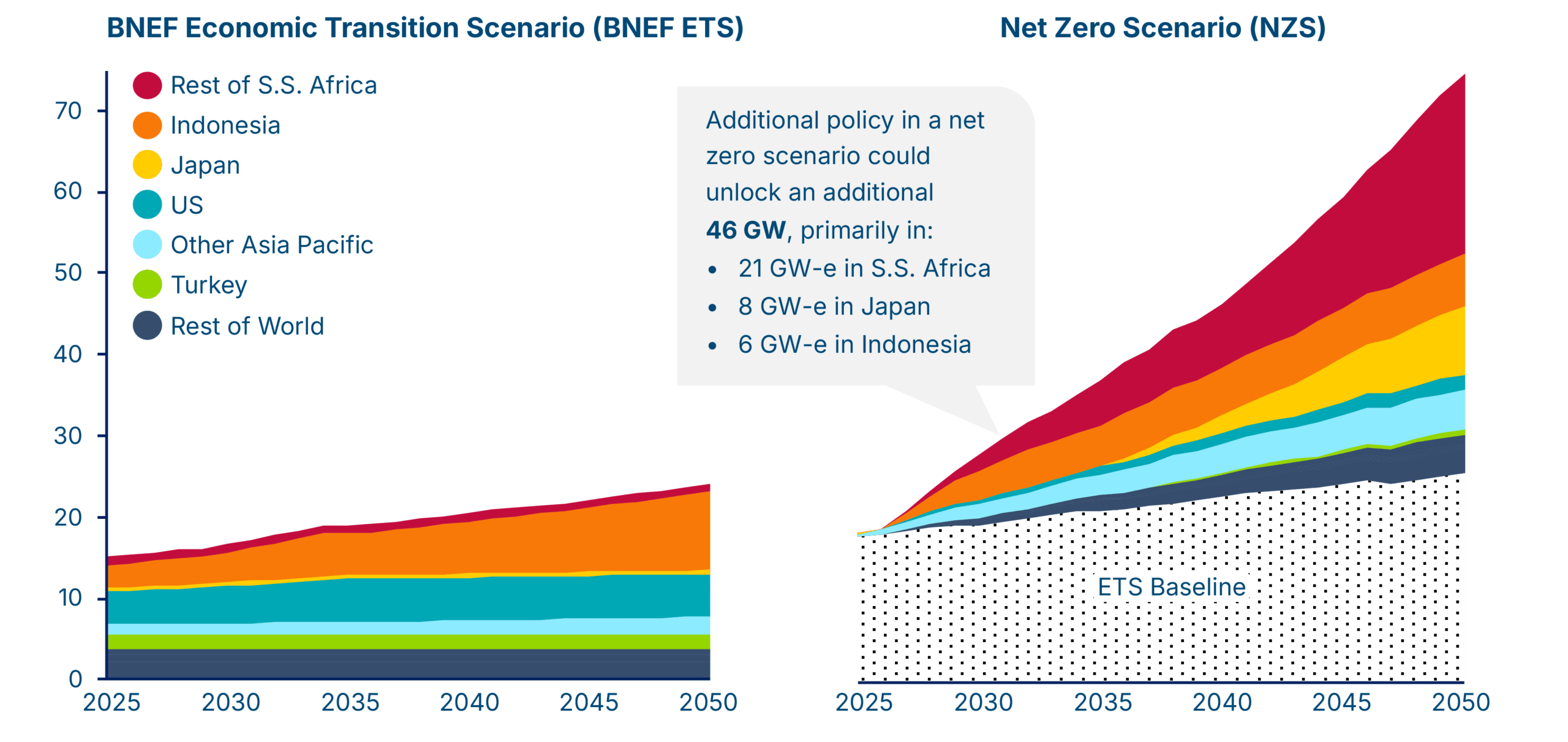
Where resource quality is high, conventional hydrothermal is cost-competitive for firm power and can scale with policy support – particularly in Sub-Saharan Africa, Indonesia and Japan
EXHIBIT 5A Global levelised cost of electricity (LCOE) ranges for key clean energy technologies in 2025 $/MWh (real 2024)
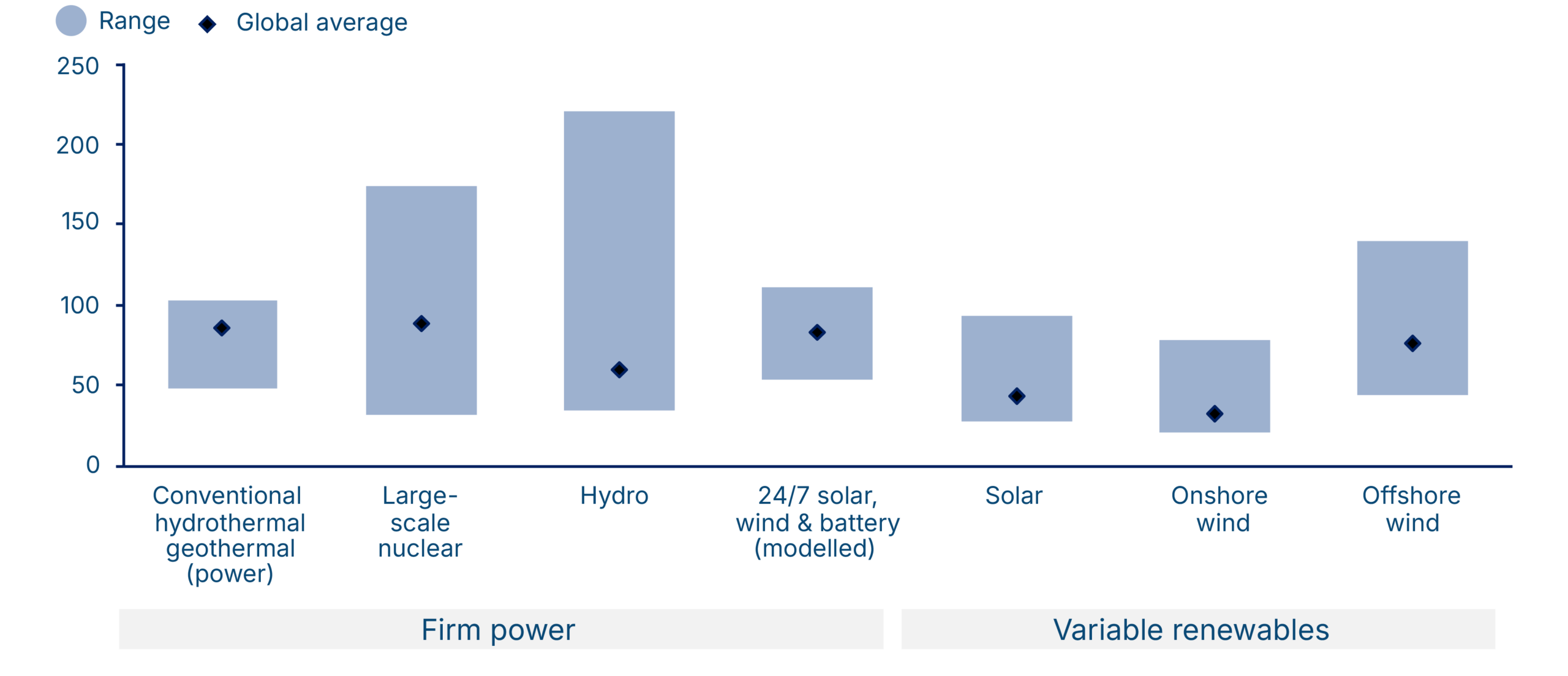
Drivers behind LCOE variation include depends on reservoir depths, resource temperature, reservoir permeability and flow rates, utilisation rates, local drilling costs and supply chain maturity, project economies of scale
EXHIBIT 5B Conventional hydrothermal power capacity by country/region (BNEF ETS vs NZS) GW-e
Notes & Sources
Notes: LCOE ranges are IRENA 5th to 95th percentiles and midpoints are IRENA’s weighted averages, except for nuclear and 24/7 solar, wind & battery which are the range midpoints due to limited data availability. 24/7 solar, wind & battery LCOE represents IRENA modelling for solar and battery energy storage at 95% reliability. NZS = Net Zero Scenario; ETS = Economic Transition Scenario; “NZS δ” refers to the additional capacity in NZS, “ETS Baseline” refers to the overlapping demand in both. Rest of S.S. Africa = Rest of Sub-Saharan Africa (including all countries except South Africa); Rest of Latin America includes Argentina, Belize, Bolivia, Colombia, Costa Rica, Cuba, Ecuador, El Salvador, Guatemala, Haiti, Honduras, Jamaica, Nicaragua, Panama, Paraguay, Peru, Uruguay, Trinidad and Tobago, Venezuela; Rest of Europe includes Austria, Belgium, Bulgaria, Croatia, Cyprus, Czechia, Greece, Hungary, Ireland, Luxembourg, Malta, Netherlands, Romania, Slovakia, Slovenia, Switzerland.
Sources: KEARNEY Energy Transition Institute (2025), Geothermal energy, turning up the heat; IRENA (2026), Renewable Power Generation Costs in 2025; IRENA (2026), 24/7 Renewables: the economics of firm solar and wind; IEA (2024), The Future of Geothermal Energy; BNEF (2026), New Energy Outlook
Costs are competitive in high-resource locations
The cost of heat is typically $20–110 per MWh-th, broadly in line with European gas alternatives. Electricity from recent projects costs around $70/MWh-e, ranging between $30–110/MWh-e across countries with different resource quality.
The deployment limit is geological – with additional capacity expected to be concentrated in a few countries with appropriate resources e.g. Indonesia, Kenya and Japan. Even optimistic projections keep conventional hydrothermal below 1% of global final heat demand and 1% of power generation by 2050. The policy template is well established: public de-risking of exploration through state-backed vehicles and drilling-risk insurance, combined with long-term offtake contracts.
Next-generation geothermal – bigger upside, bigger uncertainty
Next-generation geothermal can overcome geographic resource constraints, but current costs vary significantly depending on technology and location – these cost uncertainties will define the gap between optimism and reality.
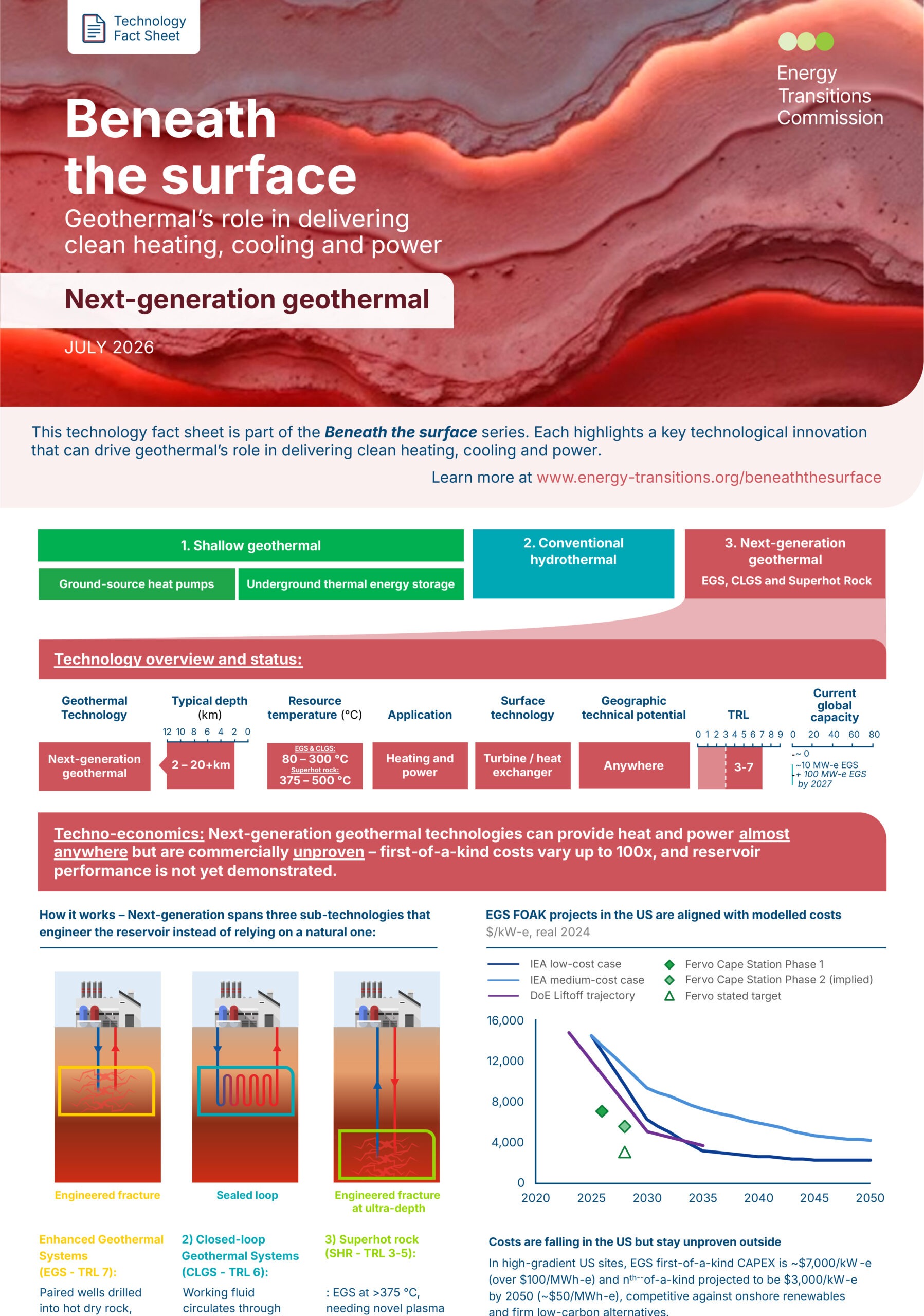
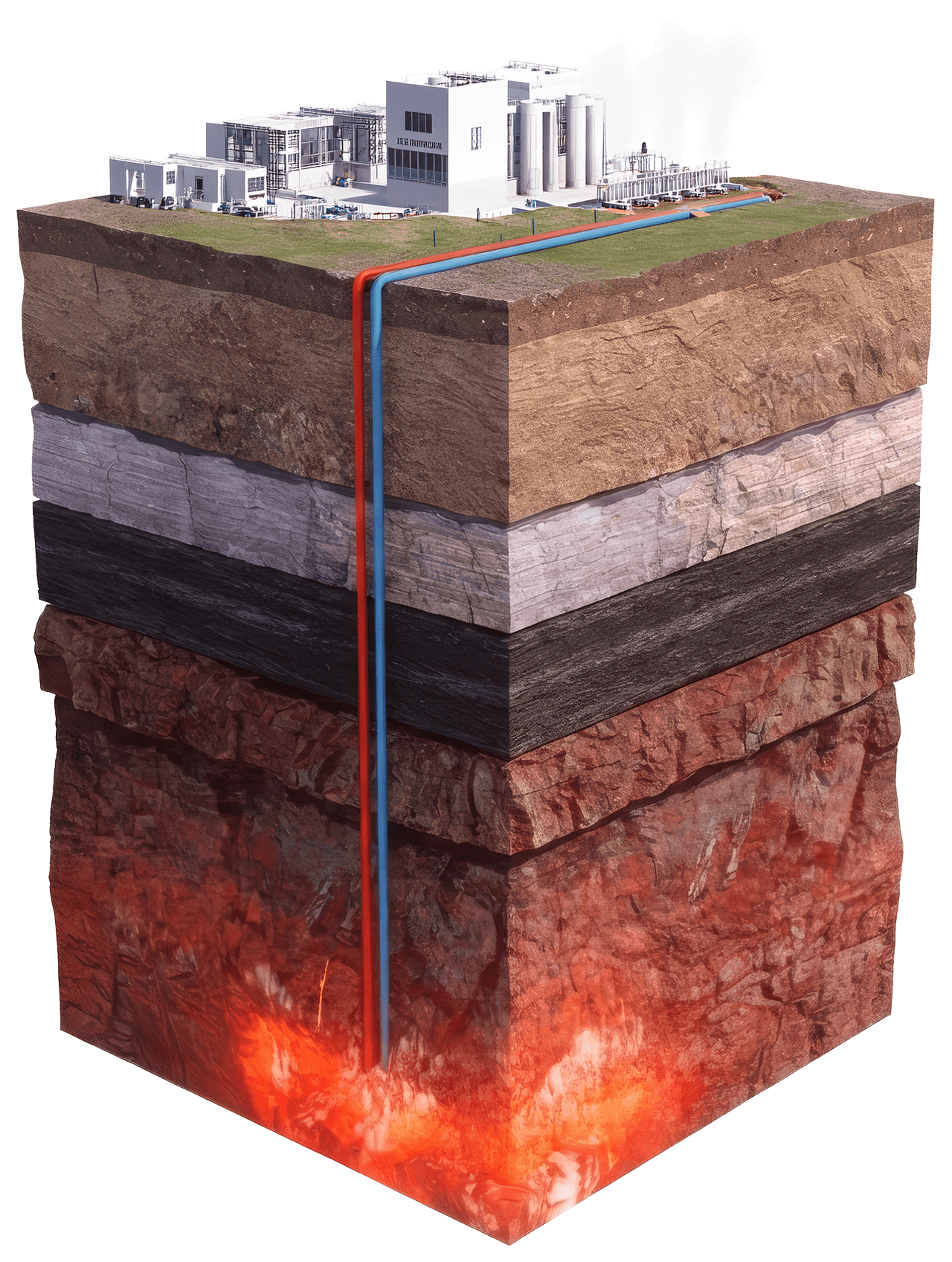
By engineering reservoirs or constructing sealed wellbores using oil and gas drilling techniques, next-generation geothermal removes the geographic constraint that limits conventional hydrothermal. The potential scale is significant – but so is the uncertainty.
For power, 2050 deployment estimates range from 30 to 800 GW-e – a 27-fold range that reflects unresolved uncertainty around cost and performance. For heat, near-term potential reaches up to 4,200 TWh-th/year (~5% of global final heat consumption) by 2050, meeting up to 4% of district heat and 9% of industrial heat demand.
The near-term power opportunity is concentrated in high-temperature gradient locations:
Demand from big tech for 24/7 carbon-free power co-located with data centres is creating an early market – Fervo Energy and Google have signed a power purchase agreement (PPA) for the 3.5 MW Project Red and a clean transition tariff for the 115 MW Corsac demonstration projects. Fervo’s May 2026 IPO raised ~$1.9 billion at a ~$10 billion open-day market capitalisation, a signal that private capital is beginning to validate bankability.
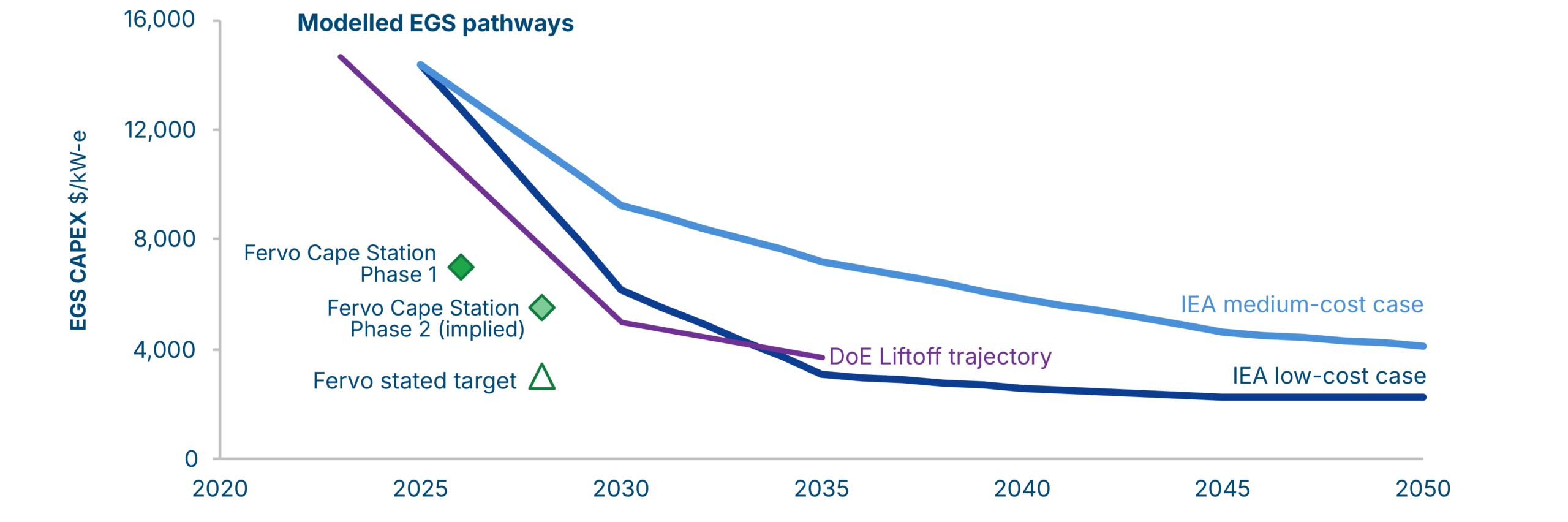
Installed costs for US Enhanced Geothermal Systems currently sit around $7,000 per kW-e, with a target of $3,000 per kW-e. By contrast, first-of-a-kind European demonstration projects have cost over $30,000 per kW-e (United Downs, UK and Eavor Geretsried, Germany) – a spread that underlines how much of next-generation geothermal’s economics still depends on where, and at what stage of learning, a project sits.
The IEA’s optimistic $50 per MWh-e by 2035 trajectory likely reflects high-gradient conditions; low-gradient sites are not on track to reach it, largely because of the larger number of deeper wells needed, which drive up CAPEX.
Next-generation levelised cost of electricity (LCOE) will be highly dependent on temperature gradients
EXHIBIT 6A Illustrative enhanced geothermal systems (EGS) cost variation by depth and temperature 2035 cost estimates Heatmap LCOE – $/MWh-e, real 2024
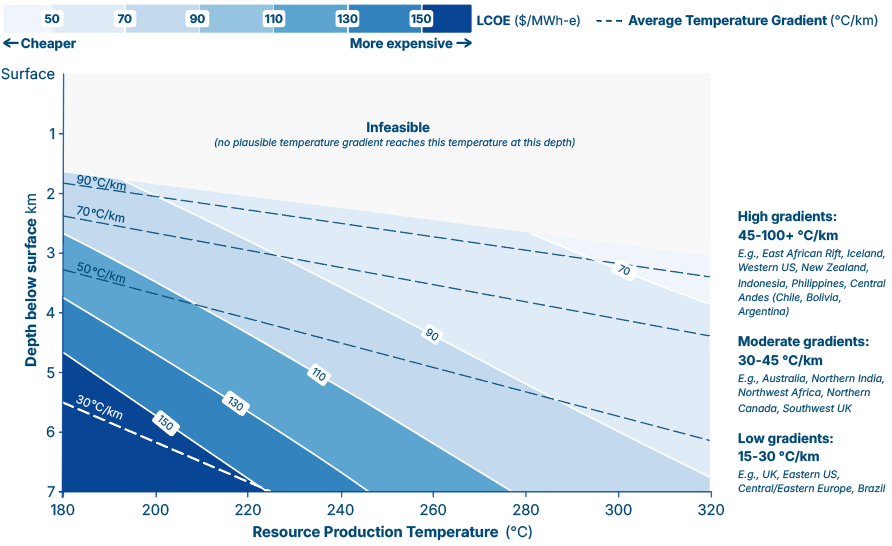
EXHIBIT 6B EGS disclosed vs. modelled EGS CAPEX data points, 2023 – 2050 $/kW-e, real 2024
Notes & Sources
Notes: IEA modelled costs for 300 MW project, 3 km depth, 200°C in suitable conditions. DoE Liftoff anchored on 2023 FOAK ($14,700 per kWe) and 2035 Earthshot ($3,700 per kWe). Fervo Cape Station CAPEX range from April 2026 IPO filing; IEA series originally in 2023 MER USD; converted to real 2024 USD using ~2.5% deflator. RHS – EGS = Enhanced Geothermal Systems, WACC = Weighted Average Cost of Capital, LCOE = Levelised Cost Of Energy. Discounted-energy basis (7% real discount rate, 25-year life). 6 production + 2 reinjection wells; 80% capacity factor. CAPEX: temperature-dependent surface plant cost plus depth-dependent drilling cost (vertical large-diameter wells), DEVEX, other CAPEX, and OPEX in line with IEA and GEOPHIRES. Thermal drawdown of 1%/yr applied to production temperature (mature-technology end of the modelled 1–2%/yr EGS range; output assumed to track the design-temperature curve, an upper bound on late-life output, not yet demonstrated at commercial scale).
Sources: Systemiq analysis for the ETC (2026), drawing on IEA (2024), The Future of Geothermal Energy; US DoE (2024), Pathways to Commercial Liftoff: Next-Generation Geothermal Power Updated; Fervo Energy Inc. (2026), Form S-1 Registration Statement, filed with the US Securities and Exchange Commission. Available at https://www.sec.gov/Archives/edgar/data/1853868/000162828026025821/fervoenergy-sx1.htm [Accessed 05 2026]; NREL (2025), 2025 Geothermal Drilling Cost Curves Update; Beckers (2019), GEOPHIRES v2.0: updated geothermal techno-economic simulation tool; US DoE (2024), Pathways to Commercial Liftoff: Next-Generation Geothermal Power Updated; Kolawole (2023), Global distribution of geothermal gradients in sedimentary basins; Limberger (2017), Geothermal energy in deep aquifers: A global assessment of the resource base for direct heat utilization.
Heat is a strong near-term opportunity in many gas-importing regions
Enhanced geothermal systems and closed-loop geothermal systems can deliver temperatures up to 300 °C, supplying process heat to food and beverage, paper and pulp, ceramics and selected chemical industries – reaching temperatures at which direct electrification is harder and costlier. In regions with high power prices, constrained electricity supply or grid capacity, the economics of next-generation geothermal (which has no fuel or electricity input) are increasingly competitive. Energy security could be a key driver for adoption: next-generation geothermal heat would be a fully sovereign industrial input, with no ongoing fuel or electricity input.
Next-generation geothermal could become competitive for low-temperature industrial heat in regions with high gas prices in the 2030s
EXHIBIT 7A LCOH for direct heat use in low-temperature industrial heat (<200°C) in the IEA’s Announced Pledges Scenario (APS), 2035 $/MWh-th (real 2024)
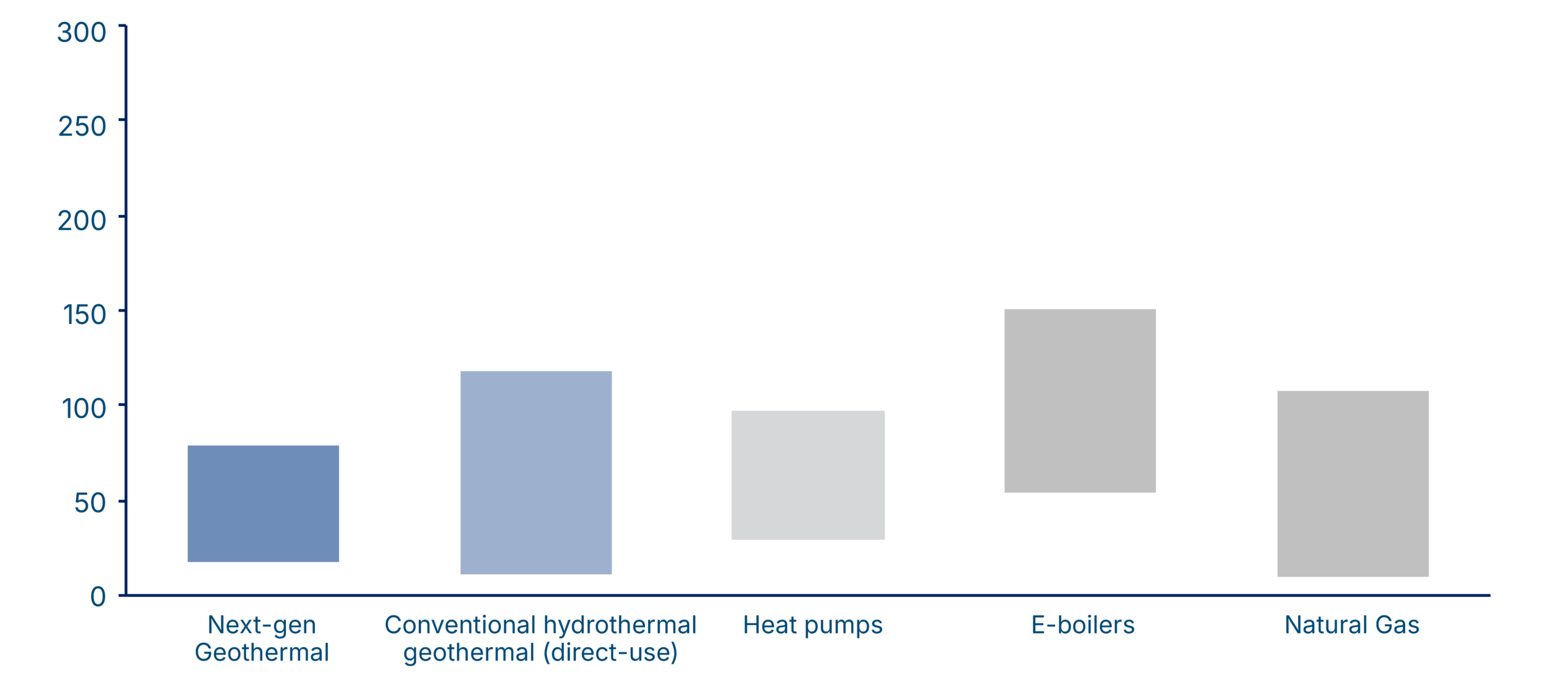
EXHIBIT 7B Gas fuel cost per MWh-th delivered in US vs EU (rolling 12-month mean and ranges) $/MWh-th (real 2024)
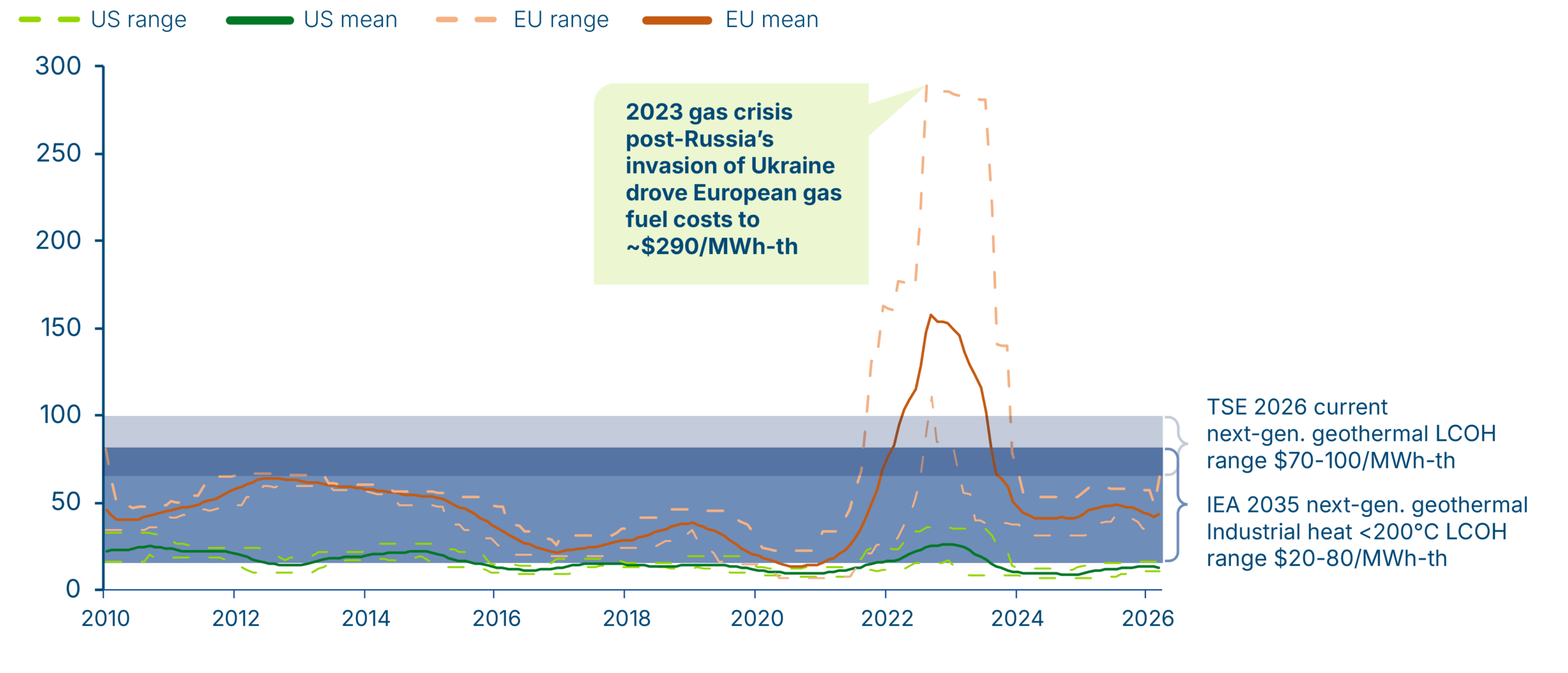
Notes & Sources
Notes: The typical geothermal direct-use LCOH range has been included on the LHS, reflecting IEA’s estimated range for geothermal direct-heat use including district heating and industry. RHS – Natural gas prices converted from $ per MMBtu to $ per MWh-th using 1 MWh-th = 3.412 MMBtu, then converted to delivered cost of heat using an assumed modern industrial gas boiler efficiency of 90% and deflated to Real 2024 USD using US CPI (each month × 2025-avg CPI ÷ that month’s CPI). Range reflects the monthly high–low within the rolling 12-month window. Series tracks the IMF’s European natural gas benchmark, historically anchored on Russian–German border pipeline prices and tracking closer to TTF spot prices from 2022 onwards. US series: Henry Hub.
Sources: IEA (2024), The Future of Geothermal Energy; International Monetary Fund (2026), Global price of Natural gas, EU [PNGASEUUSDM], Available at: <https://fred.stlouisfed.org/series/PNGASEUUSDM> [Accessed 04 2026]; International Monetary Fund (2026), Global price of Natural gas, Natural Gas, US Henry Hub Gas [PNGASUSUSDM], Available at: <https://fred.stlouisfed.org/series/PNGASEUUSDM> [Accessed 04 2026]; IEA (2024), The Future of Geothermal Energy; Thunder Said Energy (2026), Next-gen geothermal: progress update.
There is also a possible system-value case for flexible dispatch
Engineered EGS reservoirs could store pressurised fluid underground and shift output across hours to seasons, enabling a role that would command a premium as variable renewables increasingly dominate grids. However, this is yet to be demonstrated in practice.
Scale-up is highly uncertain
Two unresolved questions will define the gap between optimistic buildout scenarios and viable scale-up:
First, the potential for drilling cost declines to transfer across projects is a key uncertainty for next-generation CAPEX While project-level learning rates have been demonstrated through demonstration projects (29% per-well learning rate for Fervo’s Cape Station), learning transferability to locations with different subsurface conditions is still unproven.
Second, long-term reservoir performance is unproven – it is unclear how quickly wells will cool over time, or how much energy will be needed to keep pumping water through them, and both are critical to commercial viability. If wells cool faster than expected, or pumping the water through them needs more energy than planned, project economics worsen as costs are spread over less output. In early Fervo Cape Station data, these parasitic loads – the energy needed to pump water down thousands of metres and back up – have accounted for ~30% of gross power output.
Policy can shape the answer through first-of-a-kind risk-sharing and investment in shared subsurface data infrastructure to lower exploration costs across projects.
Risks are manageable but must be considered
Geothermal has lower environmental impacts than fossil alternatives, but environmental and social risks have halted a small minority of projects in various countries – community consent and the avoidance of sensitive sites can determine both how and whether a project proceeds.
Like all infrastructure projects, geothermal must be appropriately sited to minimise surface and subsurface environmental damage, and projects must go through appropriate community engagement. Geothermal projects typically do not cause higher levels of surface level damage or community harm than other energy projects. Given its high energy density, its land footprint is typically lower than wind or solar power.
The environmental risk profile varies significantly by technology. Shallow systems carry limited risk: low drilling depths and operating pressures mean no emissions of gases from underground and no induced seismicity risk (the small, human-caused earthquakes that deep drilling can trigger).
Conventional hydrothermal and EGS carry higher risks, but they are manageable when appropriately regulated. The key risk categories for these technologies are induced seismicity; groundwater contamination, addressed through well-integrity standards comparable to deep O&G operations; and geofluid emissions of H₂S and CO₂, which closed-loop systems eliminate by design and which require active monitoring and abatement in open systems. CLGS avoid both seismicity and emissions risks through its sealed wellbore design.
Environmental impacts have halted a small minority of past projects, including cancellations linked to induced seismicity in Switzerland and South Korea. But, across all categories, deep geothermal compares favourably to oil and gas hydraulic fracturing; it circulates water rather than chemical-laden fluids, reinjects produced fluids rather than disposing of contaminated wastewater, and operates at lower pressures.
Geothermal environmental risks are technology- and site-specific, manageable with modern practices and lower risk than oil and gas
EXHIBIT 8 Comparison of environmental risks across geothermal technologies and oil and gas

Notes & Sources
Notes: Ground-source heat pumps (GSHP), underground thermal energy storage (UTES), conventional hydrothermal, closed-loop geothermal systems (CLGS), enhanced geothermal systems (EGS), superhot rock (SHR). Risk levels reflect published reviews and regulatory assessments. Actual impacts depend on geology, design, regulation and operator practice.
Sources: U.S. Department of Energy (n.d.), Geothermal – Environmental Analysis; Clean Air Task Force (2025), Introduction to the Next Clean Energy Frontier: Superhot Rock Opportunities and Responsible Development; Union of Concerned Scientists (2024), Environmental Impacts of Geothermal Energy; BKV Energy (2024), Environmental Impact of Geothermal Energy; Fiveable (2024) Environmental Impacts of Geothermal Energy; International Energy Agency (2013), Golden Rules for a Golden Age of Gas.
Community consent is an important consideration for all large-scale geothermal development. In Indonesia, attempted development on Flores stalled after inadequate community engagement led to significant local opposition; the World Bank withdrew from the project in 2023. Community consent is an important consideration for all large-scale geothermal developments.
Social licence to operate through proactive community engagement is therefore as critical as technical mitigation. Technical mitigations for deep geothermal environmental impacts, including traffic-light seismic monitoring, pre-stimulation fault mapping and sealed wellbores, are well understood.

Matching policy to technology
Each geothermal technology has different binding constraints across resource, financing, supply chains and technology readiness levels. Effective policy means targeting the right intervention for the right technology in the right geography.
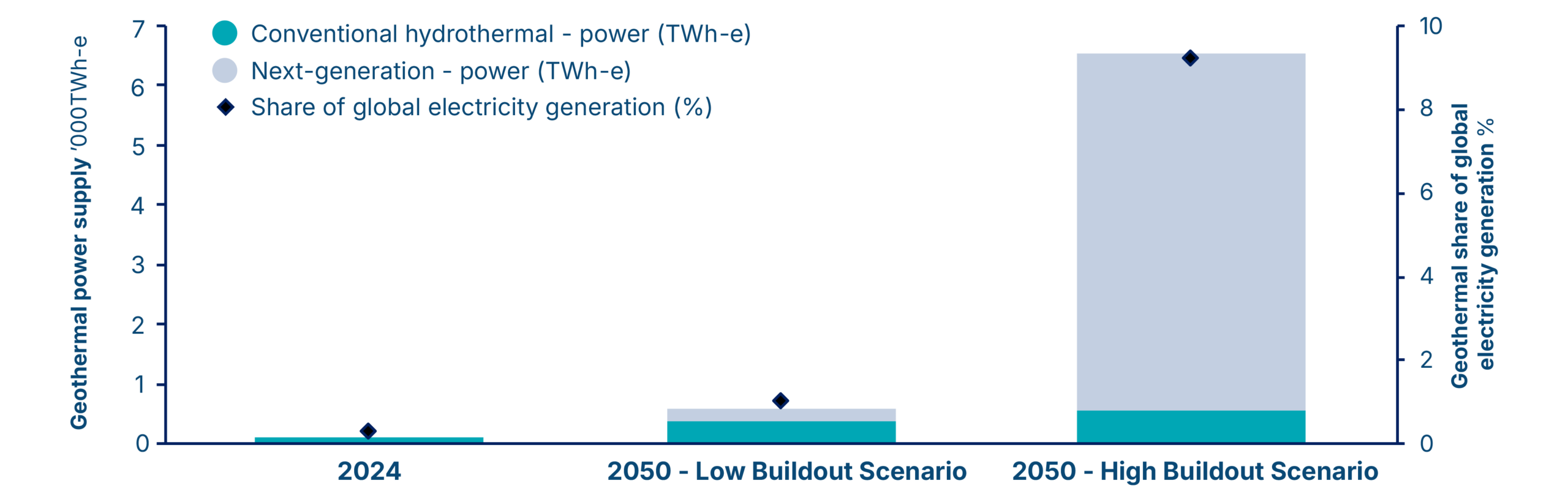
Heat and electricity supplied by geothermal technologies could increase by 4–20x and 6–65x respectively, raising geothermal’s share of final heat consumption to 1–8% and of electricity generation to 1–9%. Across all technology categories, the extent of this scale-up will depend on whether supportive policy unlocks investment and, above all, on whether costs fall significantly for next-generation technologies.
Geothermal meets under 1% of heat and power today, but could rise to between 1–9% by 2050, depending on whether next-gen. scales
EXHIBIT 9A Heat – Estimated 2024 and 2050 geothermal global heat supply by technology type and total share of final heat consumption
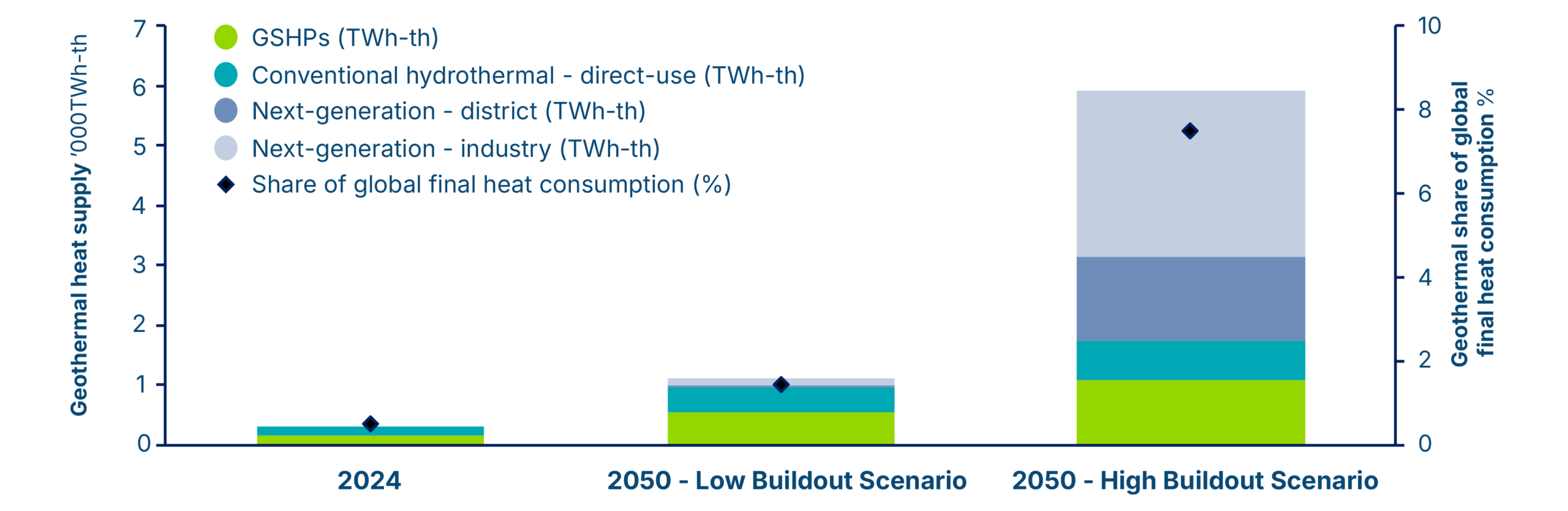
EXHIBIT 9B Power – Estimated 2024 and 2050 geothermal global electricity supply by technology type and total share of electricity generation
Notes & Sources
Notes: GSHP = ground-source heat pump. Today represents the most recent capacity/generation estimates available (2024). 2050 low and high estimates reflect IEA Stated Policies Scenario and Announced Pledges Scenario estimates, respectively, apart from: the low cases for next-generation – district & industry, which reflect Systemiq estimates assuming the same low to high ratio as IEA’s next-generation power estimates, and GSHPs, which uses IEA’s SP as the low case and ETC assumptions based on GSHPs meeting 5% of heat pump growth in BNEF’s Net Zero scenario as the high case. Share of global final heat consumption in 2024 estimated using IEA Renewables 2025 global heat consumption data. Next-generation – district refers to next-gen co-generation. Power estimates for 2050 are based on IEA’s low to high range of 30 – 800 GW and an assumed capacity factor of 85%. UTES time-shifts heat sourced elsewhere rather than representing an independent delivered-heat resource.
Sources: Systemiq analysis for the ETC (2026); IEA (2024), The Future of Geothermal Energy; IEA (2024) Renewables 2025; BNEF (2026), New Energy Outlook
Shallow geothermal systems
Viable in all countries with seasonally varying heating or cooling demand – the binding constraints are financial and institutional. Policy should introduce subsidies to target the upfront capital cost barrier, building-code mandates, district-scale financing that spreads costs of ground-loop across multiple properties and measures to embed seasonal UTES into district-heating planning.
Conventional hydrothermal systems
Viable in a subset of geologies – the key constraints are resource availability and drilling risk. Policy should focus on publicly funded exploration programmes, drilling-risk insurance, and long-term offtake contracts.
Next-generation systems
Likely to commercialise first in the US – the central question is whether demonstrated cost declines prove transferable. Policy can support this through first-of-a-kind risk-sharing (exploration grants, drilling-risk guarantees) and investment in shared subsurface data infrastructure.
Policy priorities to unlock scale follow from that split: each technology has a different binding constraint, and progress in the coming decades depends on key policy support.
The bottom line
Across all three families, the pattern is consistent: Geothermal has a growing role in heat and power. Shallow systems can decarbonise building heating and cooling in almost any geography – and are under-deployed relative to their potential.
Conventional hydrothermal and next-generation systems can supply gas-displacing industrial process heat and firm power in a growing number of markets.
The question for policymakers and investors is not whether geothermal deserves attention, but whether the right interventions – targeted to the right technology, in the right geography – are in place to unlock it.
Based on the ETC briefing note Beneath the Surface: Geothermal’s Role in Delivering Clean Heating, Cooling and Power which you can download here
Featured publications

July 2026 |
Sector Decarbonisation

Paper
April 2026 |
Sector Decarbonisation
Paper
December 2025 |
Sector Decarbonisation

Report
November 2025 |
Hydrogen
Clean electricity supplied 40% of new energy demand in 2025. Faster deployment and sectoral breakthroughs can cut emissions permanently
Read more
A progress paradox: Clean electricity is growing more than twice the speed of overall energy supply, but emissions are not yet falling as overall demand for both fossil and clean…
Hormuz crisis shows clean energy is key to reducing the economic cost of fossil fuel dependence
The Energy Transitions Commission Secretariat warns crisis-driven responses that reinforce fossil fuel dependence risk locking…
Heavy industry could grow global output while using up to 45% less energy by 2050
30-50% of costs for heavy industry come from energy consumption 25-45% reduction in energy use…
Welcome Back: Energy Transitions Commission strengthens global leadership with appointment of Jules Kortenhorst as Co-Chair
10 December 2025 — The Energy Transitions Commission (ETC) today announced that Jules Kortenhorst will…
Innovation Zero 2026
28 April 2026
The ETC are heading to Innovation Zero World Congress 2026 🚀 Co-Chair Adair Turner, Deputy Director Mike Hemsley, and Global Programmes Lead Phoebe O’Hara will all be speaking at this...
Read more
Climate Innovation Forum 2026
22 June 2026
The Climate Innovation Forum is the opening flagship event of…
The Nest Campus: Climate week NYC September 2026
22 September 2026
Join the world’s largest gathering of resilience leaders - September…