

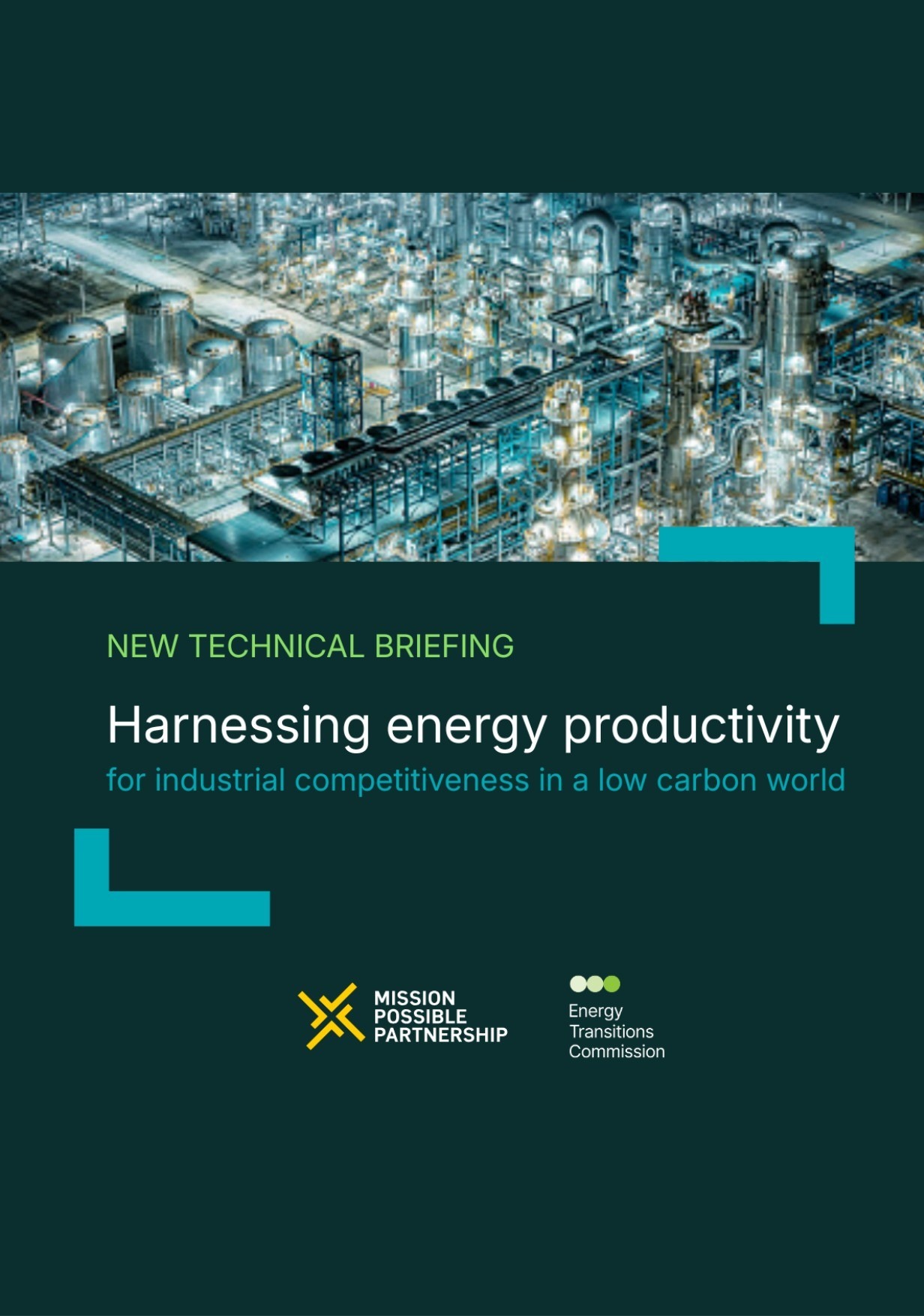
Harnessing Energy Productivity for Industrial Competitiveness in a Low Carbon World
April 2026
Improving energy productivity can meet rising needs for housing, mobility and goods while reducing reliance on expensive fossil fuels and the need for new energy infrastructure, according to this report by the Energy Transitions Commission (ETC) and the Mission Possible Partnership (MPP).
Energy productivity measures the economic value generated from each unit of energy – improving it delivers the same (or greater) output from less energy. The report shows that more efficient ships, planes and industrial plant, using less material, using things for longer and recycling can reduce the cost and complexity of decarbonising energy-intensive industries while strengthening industrial competitiveness.
Energy-intensive sectors – aluminium, aviation, cement, plastics & chemicals, shipping and steel – form the foundations of modern economies: our houses, transport, and goods. Together, these sectors account for a third of global energy demand.
By 2025, steel, aluminium, cement and plastics & chemicals demand is expected to grow 25%-100%, aviation 150%, and shipping 45%, driven by rising global prosperity, urbanisation, and industrialisation. This growth could be delivered using 25-45% less energy and at lower cost, by improving energy productivity, compared to a scenario with no productivity gains,
Related publications